Illustrate your designs with drawings
Drawings allow us to represent things on a piece of paper that we have seen in real life or thoughts from our minds. Either done by hand or with the help of a graphics tablet, a drawing has that personal touch, a little portion of your imagination poured into it. With enough experience and a bit of skill, the results can look very realistic, indeed.
Balance out your compositions using this stunning collection of drawings to fascinate an audience





Nature

Butterfly drawings

Dog drawings

Fish drawings

Elephant drawings

Apple drawings

Turkey drawings

Flower drawings

Bird drawings

Sunflower drawings

Earth drawings

Cactus drawings

Save water drawings

Pollution drawings

Snake drawings

Fruits drawings

Environment drawings

Pumpkin drawings

Star drawings
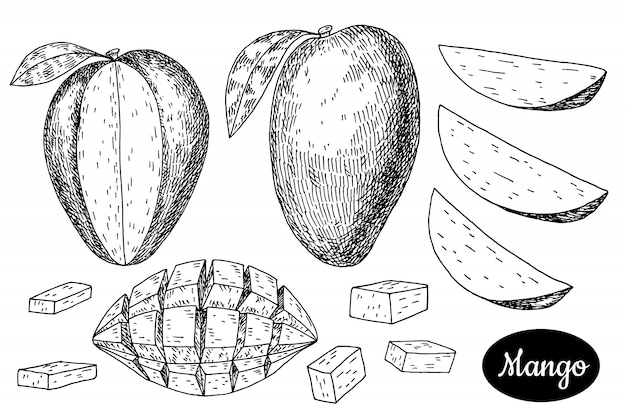
Mango drawings

Banana drawings
Events


Objects

Teddy bear drawings

Food drawings

Statue of Liberty drawings

Book drawings

Rakhi drawings

Mexican flag drawings

Skull drawings

Sugar skull drawings

India map drawings

Mandala drawings

American flag drawing

Taco drawings

Flower bouquet drawings
Rangoli drawings

Diya drawings

Indian flag drawings

Money drawings

Fireworks drawings

Kalash drawings

Funny drawings
People

Heart drawings

Kid drawings

School drawings

Best friend drawings

Brother and sister drawings

Woman body drawings

Skeleton drawings

Lord Shiva drawings

Love drawings

Doctor drawings

India drawings

Hindu god drawings

Family drawings

Buddha drawings

Yoga drawings

Radha Krishna drawings

Mahatma Gandhi drawings

Saraswati Maa drawing

Couple drawings

Farmer drawings

Design coloring activities for children with drawings
Fun activities for kids include drawing and coloring. That’s precisely one of the main uses of such images: you can print drawings so children can color them and have a lot of fun. They are also the perfect addition to fairytale books, as they illustrate what’s happening in the story and fuel imagination.

Trust the hand-drawn style and use it in your compositions
Realistic art is present in many compositions and designs, but sometimes you just need something that looks different, more hand-drawn, and that’s exactly what you can achieve with drawings. To give your conception a more personal, handmade touch, these are the perfect assets for achieving that. Plus, you’ll have a lot of fun with them.

Use drawings in presentations to illustrate concepts
In today’s education, many teachers are embracing technology and are incorporating slideshows and presentations into their lessons. These allow them to illustrate the concepts with examples and make complex information more manageable for the students. Visual assets such as drawings are useful for that, especially when teaching children.
FAQ
A drawing can be defined as a visual representation of objects, concepts, emotions, and even abstract forms. Although that’s a very broad definition, drawing is considered graphic art, and it emphasizes form or shape rather than mass and color. Drawing, consequently, comes in many types. Depending on the source or author, the number and the names of these styles may vary. Some of the most common are cartoon drawing, figure drawing, gesture drawing, line drawing, and perspective drawing, but these are just a few.
There are five skills that are considered basic in terms of drawing as an art, but, once again, this may vary depending on the author or source. Recognizing edges, understanding proportions and perspectives, applying color and understanding what each one means, using lighting and shadows effectively, and (perhaps the most important one) communicating what you want to the viewer.
Something as broad as popularity varies depending on many circumstances, such as demand, culture, location, purpose, etc. Here are some that are considered more widespread than others (but note that there are many more): Cartoon, Pointillism, Line drawing, Photorealism, Architectural drawing, etc.
Drawing is a visual art form in which the artist uses lines to represent objects, characters, animals, or even concepts. It’s created with the so-called dry media: pencils, chalk, charcoal, etc. Meanwhile, painting focuses more on color and forms. It’s mostly created with paint (hence the name), and the types of surfaces used are broader than in drawing, which usually focuses on paper or canvas.
Related articles

Color meanings and symbolism
Discover the color meanings and the symbolism they represent in design. Take your graphic designs to another level by applying the right colors.

How to design a cartoon in a few steps
A cartoon is a type of drawing that can be used for animation or any other application and whose construction is based on the exaggeration of characteristic features.

The golden ratio in graphic design
Discover the golden ratio in design - from its use in art to nature - and learn what it means, its importance, and how to use it to create compelling imagery.